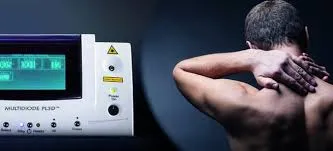
Why Doctors & Patients Choose PL3D
1. Much Safer Temperatures → Protects Your Nerves
- PL3D keeps the disc temperature below 50°C, which is safe for nerves.
- Older methods (PLDD / PDCT) can reach 80–100°C or more, increasing the risk of nerve damage, burns, or scar tissue.
2. Gentle Vaporisation, Not Burning
- PL3D gently vaporises the disc material to relieve pressure.
- PLDD and PDCT burn the disc, which can create charred tissue (“charcoal effect”) and lead to complications.
3. Built-In Safety Checks
- PL3D has full fiber-optic and laser power verification before every procedure.
- Older technologies do not have these safety checks, so the laser may deliver too much or too little energy, causing unpredictable results.
4. Prevents Pressure Buildup Inside the Disc
- PL3D includes a evacution suction system that removes gas buildup inside the disc.
- PLDD and PDCT have no suction, so trapped gas can cause increased pressure and pain.
5. Controlled Outcomes
- PL3D delivers stable, consistent energy, giving reliable and repeatable results.
- PLDD and PDCT often produce variable results due to outdated equipment and higher heat.
6. Designed to Fix Problems Found in Older Techniques
PL3D is engineered as a next-generation improvement, created specifically to reduce:
- nerve injury
- disc adhesion
- overheating
- unpredictable outcomes
all of which have been reported with PLDD and PDCT
Who Can Benefit?
PL3D may be suitable for individuals who have:
- Contained or mildly extruded lumbar/cervical disc herniations
- Sciatica or radicular leg/arm pain caused by disc protrusion pressing on the nerve root.Chronic back or neck pain unresponsive to physiotherapy
- Back or neck pain associated with elevated intradiscal pressure, where minimally invasive decompression is indicated.
- Persistent or recurrent disc-related pain, where conservative or prior treatments did not provide sufficient improvement.
The Procedure:
|
Step |
Details |
|
Duration |
Typically, 30–45 minutes, depending on disc level and energy required. |
|
Anaesthesia |
Sedative or GA |
|
Hospital admission |
Day-care procedure - patients are discharged shortly after treatment with minimal morbidity. |
|
Recovery |
Rapid recovery since there is no incision, no muscle damage, and no bone removal; patients often resume light activity quickly |
|
Follow-up |
Routine clinical follow-up; imaging if symptoms persist or to review clinical improvement. |
For Doctors: Technical Overview
980 nm diode laser - optimized for disc decompression
· 10× higher absorption than 810 nm
· 5× higher absorption than 1064 nm
· Higher water absorption → precise nucleus vaporization with less heat diffusion
· Mechanism: Disc-selective vaporization to reduction intradiscal pressure
- Thermal Safety: Auto-regulated < 50 °C, Gas produced is actively evacuated via patented Y-connector smoke removal system
- Hardware Safeguards:
- Built-in fiber ID verification
- External power meter to verify actual laser output before fiber insertion
- Built-in smoke evacuation via patented Y-connector reduces intradiscal pressure and postoperative spasm
- Access Instrumentation: 21 G needle + Y-connector
FAQ
Is PL3D a surgery?
No. PL3D is a percutaneous (needle-based) laser decompression technique, performed through a 21G needle under local anaesthesia with no incision, no stitches, and no bone or muscle removal. Patients are typically discharged the same day
How safe is it near spinal nerves?
PL3D maintains disc temperature below 50 °C, uses fiber verification, laser energy calibration, and suction cooling for added safety
How soon can I get back to normal activity?
Most patients return to light activity within 1–2 days and feel progressive pain relief over the following weeks. PL3D involves no incision and no muscle disruption, so recovery is much faster than open surgery.
Patients are typically discharged the same day, with significantly reduced rehabilitation time.
Can PL3D help after failed physiotherapy?
Yes - PL3D is especially effective in contained or mildly extruded disc herniations and typically recommended for patients who’ve not responded to conservative treatments.
Clinical Evidence & Research Insights

Summary: The study evaluated 40 patients with chronic low back pain caused by lumbar disc protrusion who underwent Percutaneous Laser Disc Decompression (PLDD) and were followed for two years. Results showed significant improvement in pain and disability levels (p = 0.00001), with no major differences between genders or treated disc levels. The findings confirm that PLDD is a minimally invasive, safe, and effective long-term treatment option for reducing pain and improving function in patients with disc protrusion. Click the full article
|
Summary: This study evaluated 30 patients with lumbar disc herniation treated using Percutaneous Laser Disc Decompression (PLDD) with a 980 nm diode laser. Pain severity and disability were measured using the Visual Analog Scale (VAS) and Oswestry Disability Index (ODI) before and after treatment. Results showed a significant reduction in both pain and disability levels following PLDD, with no statistical difference between male and female patients. The findings confirm that PLDD is an effective, minimally invasive method for reducing pain and disability in patients with lumbar disc herniation. Click full article |
Case studies in Malaysia
KPJ Ampang Puteri Hospital (2018):
• 90.3 % excellent outcomes at 6 months
• 95 % total success rate at follow-up
• No scar tissue / no spinal instability
• Patients walked home within hours and resumed work in under a week
